Robert Thomas "Bob" Stubbs
Birmingham's first racing champion and mentor of the South's first national star
1879 – 1922
An ode to my great-great-grandfather on my mother's side: a pioneering figure in American motorsports who helped establish Birmingham as the South's motorcycle capital and discovered a 19-time national champion.
- 1908World record set
- 43⅖Seconds (mile record)
- 19Walker's championships
- 1907Club president
Early life and family
Robert Thomas "Bob" Stubbs was born in 1879 in Dayton, Marengo County, Alabama, the eldest of ten children of Thomas J. Stubbs and Elizabeth (Gilbert) Stubbs. His father worked as a farmer, and the family eventually moved toward Birmingham, a city transforming into the "Magic City" of the South with steel, coal, and ambition.
As the eldest son, Bob grew up with responsibility on his shoulders but also a restless drive that found its outlet in speed. He later married Barbara Stubbs, and together they raised children, including a daughter Elizabeth Stubbs, who became my great-grandmother on my mother's side. Elizabeth lived much of her life in Kansas and was remembered as a gentle and kind woman, a living reminder of our family's Southern roots and the daring legacy of her father, my great-great-grandfather.
From bicycles to motorcycles
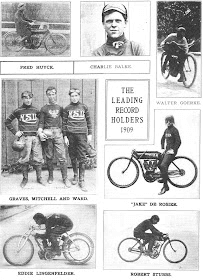
Stubbs began as a bicycle racer. An 1898 article in The Atlanta Constitution listed him among winners at a cycling meet, marking his entry into competitive sport.
By the mid-1900s, with motorized "motocycles" capturing national fascination, Stubbs transitioned to motorcycles. In 1907, he was racing Indian machines at the Alabama State Fairgrounds, sweeping entire programs and establishing himself as Birmingham's first motorcycle champion. That same year he was elected President of the Birmingham Motorcycle Club, which pledged civic-minded riding while thrilling crowds with races and hill climbs.
Racing achievements
- 1908
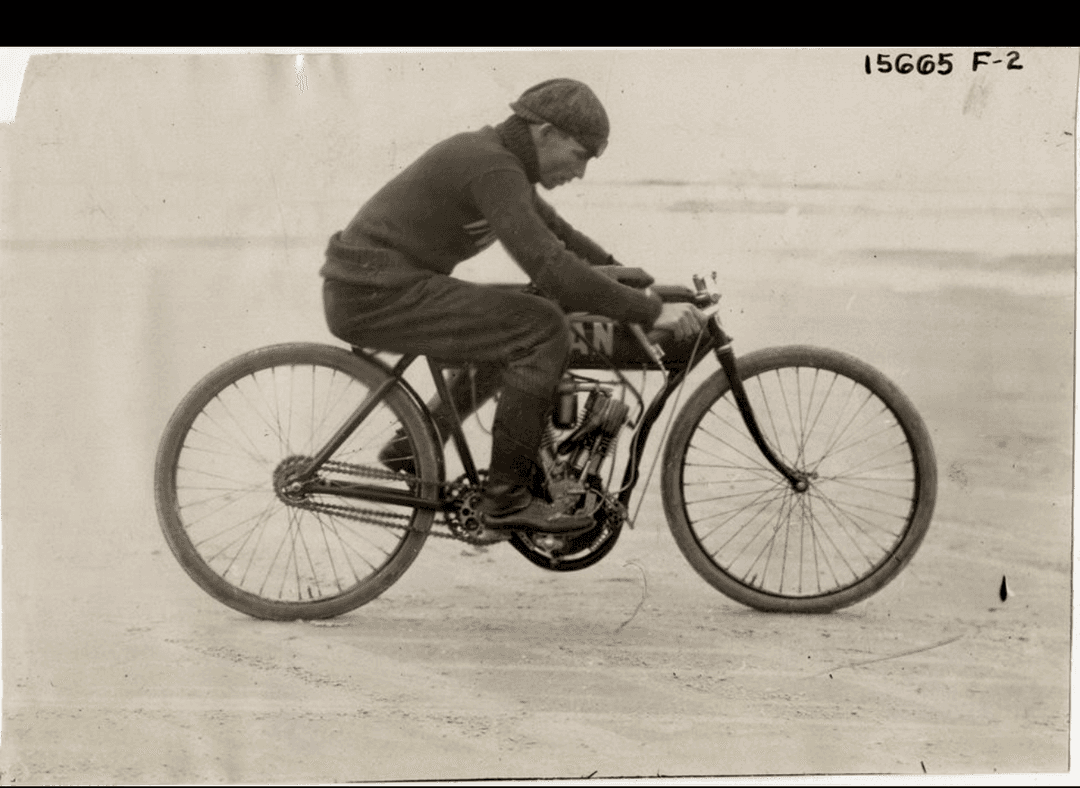
Claimed the Southern Championship and set an endurance world record at Birmingham's Fairgrounds — 100 miles in 1 hour, 47 minutes, 44 seconds on the dirt oval.
- 1909
Signed as an Indian factory rider for the prestigious Ormond–Daytona speed trials. Alongside Walter Goerke and Jake DeRosier, Stubbs lowered the one-mile record to 43 2/5 seconds, a mark reported in U.S. and international motorcycling journals.
- 1910
Set a Birmingham-to-Atlanta road record of just over seven hours and beat automobiles in a Shades Mountain hill climb.
These performances made Stubbs one of the few Southern riders to gain national and international attention in an era dominated by Northeastern and Midwestern racers.
Rivalries and risks
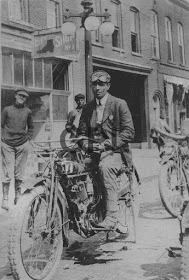
Motorcycle racing at the time was perilous, and Stubbs was not immune. He famously clashed with fellow Indian rider Jake DeRosier, the sport's first true celebrity. Their rivalry turned physical in Birmingham in 1911, when the two fought in a hotel after tense races.
That same year, Stubbs suffered a serious crash at the Fairgrounds after a tire burst, leaving him with eye injuries. While he returned to competition — winning the sidecar class in 1913 — the accident marked the end of his days as a solo national contender.
Dealer, promoter, and community builder
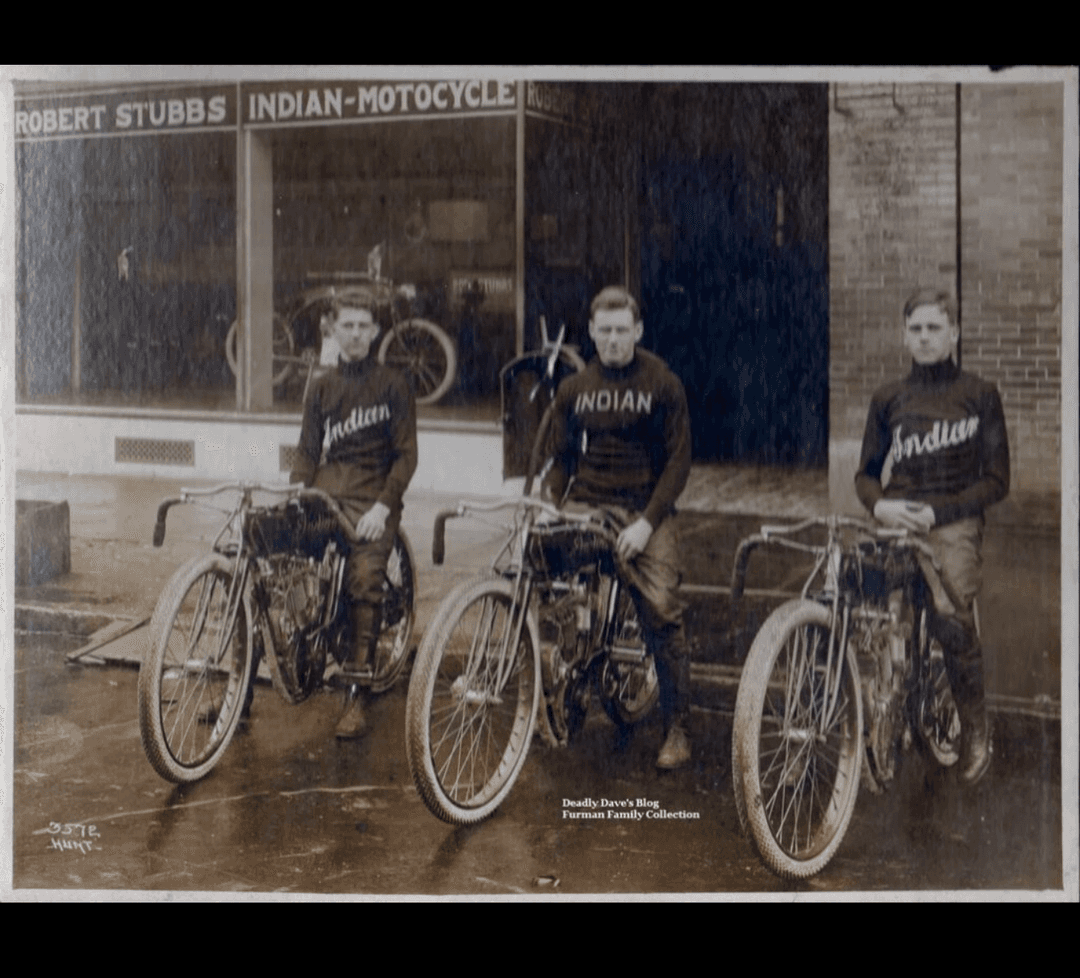
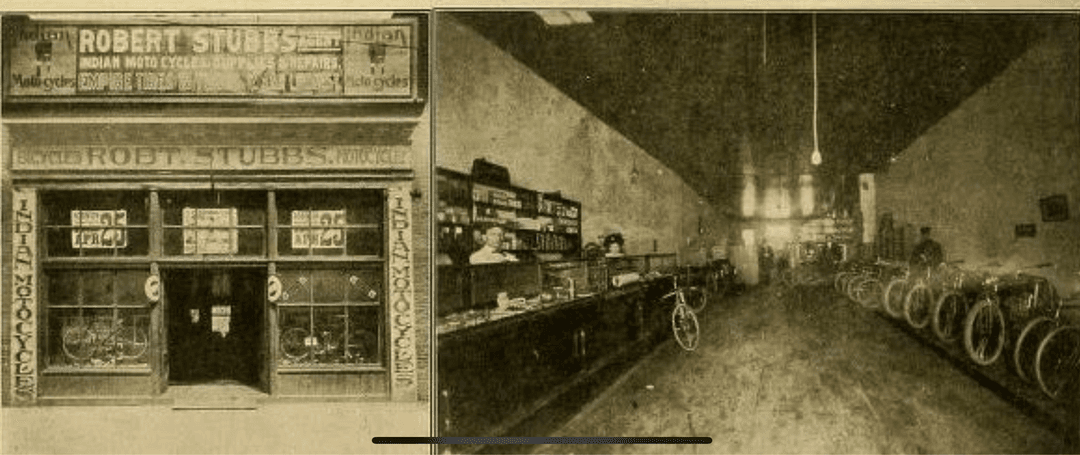
Rather than fading away, Stubbs reinvented himself. He opened Stubbs Indian at 1805 4th Avenue North in Birmingham. The dealership became both a business and a community center, where local riders gathered and the city's motorcycle culture took shape.
Stubbs staged endurance contests and stunts — including famously towing a wagonload of passengers through downtown Birmingham on a powerful Indian. These events turned motorcycling from a novelty into a civic spectacle, aligning Birmingham's modern image with the thrill of speed.
Through his efforts, Birmingham became known as an "Indian town" and one of the South's earliest motorcycling hubs.
Mentorship of Gene Walker
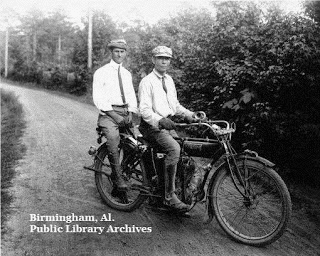
Stubbs's most enduring legacy came through his mentorship of Gene Walker.
In 1912, Walker, a young Birmingham postal worker, entered his first amateur race. Stubbs immediately recognized his talent. By 1913, Walker was employed at Stubbs Indian, where he gained access to competitive machines and steady support.
Under Stubbs's guidance, Walker began winning local and regional contests. In 1914, he finished second in the Birmingham Ledger Endurance Run as part of Stubbs's team, cementing his rise. Within a year, Walker was signed to the Indian Factory Team, where he went on to win 19 national championships before his untimely death in 1924.
Stubbs is widely credited with discovering and launching Walker, making him a pivotal figure in bringing Southern talent to the national stage.
Later years and passing
World War I disrupted motorcycle production, forcing Stubbs to close his dealership. By 1918, he was managing the motorcycle department at Hobie Motor Car Company in Montgomery, which sold Harley-Davidson and Cleveland machines.
In 1922, at only 43 years old, Robert Thomas Stubbs died of cancer. Contemporary sources do not specify the type, but his early passing cut short the life of a man who had embodied the South's embrace of speed and modernity.
Legacy
Racing legacy
One of the South's first nationally recognized racers.
Set world and national records in endurance and speed.
Rode as an Indian factory rider during the brand's formative years.
Cultural legacy
Founder of Birmingham's motorcycle community.
Dealer, promoter, and public figure who tied motorcycling to civic identity.
Helped make Birmingham an early hub of motor culture in the South.
Family legacy
Father to children including Elizabeth Stubbs, who carried forward the family's warmth and kindness and became my great-grandmother.
Through his descendants, including me — his great-great-grandson — his story has survived in both racing archives and our cherished family memories.
In historical context
While Stubbs did not achieve the lasting fame of contemporaries like Jake DeRosier, Charles Balke, or his protégé Gene Walker, his contributions were foundational. He proved that the South could produce champions, records, and culture at the dawn of motorcycling.
As Birmingham's first racing hero, a world-record setter, a community builder, and the man who discovered Gene Walker, Robert Thomas "Bob" Stubbs stands as a bridge figure in American motorsport history: one who embodied both daring achievement and enduring legacy.
My great-great-grandfather Bob Stubbs's story reminds me that the roots of American motorsports run deep in unexpected places, built by determined individuals who saw the future in two wheels and an engine, and had the courage to chase it at full speed. This page serves as my personal tribute to his remarkable legacy and our family's proud heritage.